AI can turn a text prompt into a printable 3D model in under a minute. Here are the tools that actually work for makers, plus the honest catch none of them mention.
AI 3D model generators have crossed a threshold in 2026. Type a description, wait a minute or two, and you get a textured mesh ready for export. The honest catch, and every tool-maker skips over this: almost none of them produce a model you can slice and print without a repair pass first. The output is designed to look good rendered, not to pass a slicer's manifold check.
That said, the category is genuinely useful for makers. AI generation saves real time on organic shapes: miniatures, busts, props, tabletop terrain, and concept models. It is not yet the right starting point for functional parts with tight tolerances. For brackets, enclosures, and anything that has to fit together, use CAD. The generators below make surfaces and shapes, not precise solids.
Meshy
Meshy is the most well-rounded AI generator for 3D printing. It does text-to-3D, image-to-3D, PBR texturing, auto-rigging, and animation, and it ships slicer plugins for Bambu Studio, OrcaSlicer, Cura, Creality Print, and Elegoo Slicer. The meshes are among the cleanest in the consumer category, though a quick repair check is still smart before printing. The free tier gives roughly 100 credits per month, which works out to about 10 models under a non-commercial license. Pro plans run around $20 per month and unlock commercial use, more credits, and direct export to Bambu Studio with one click.
Meshy is the pick when you want the shortest path from a prompt to a slicer. It is the only AI generator with native Bambu Studio integration and 3MF export, the print format that preserves color and multi-material data.
Tripo
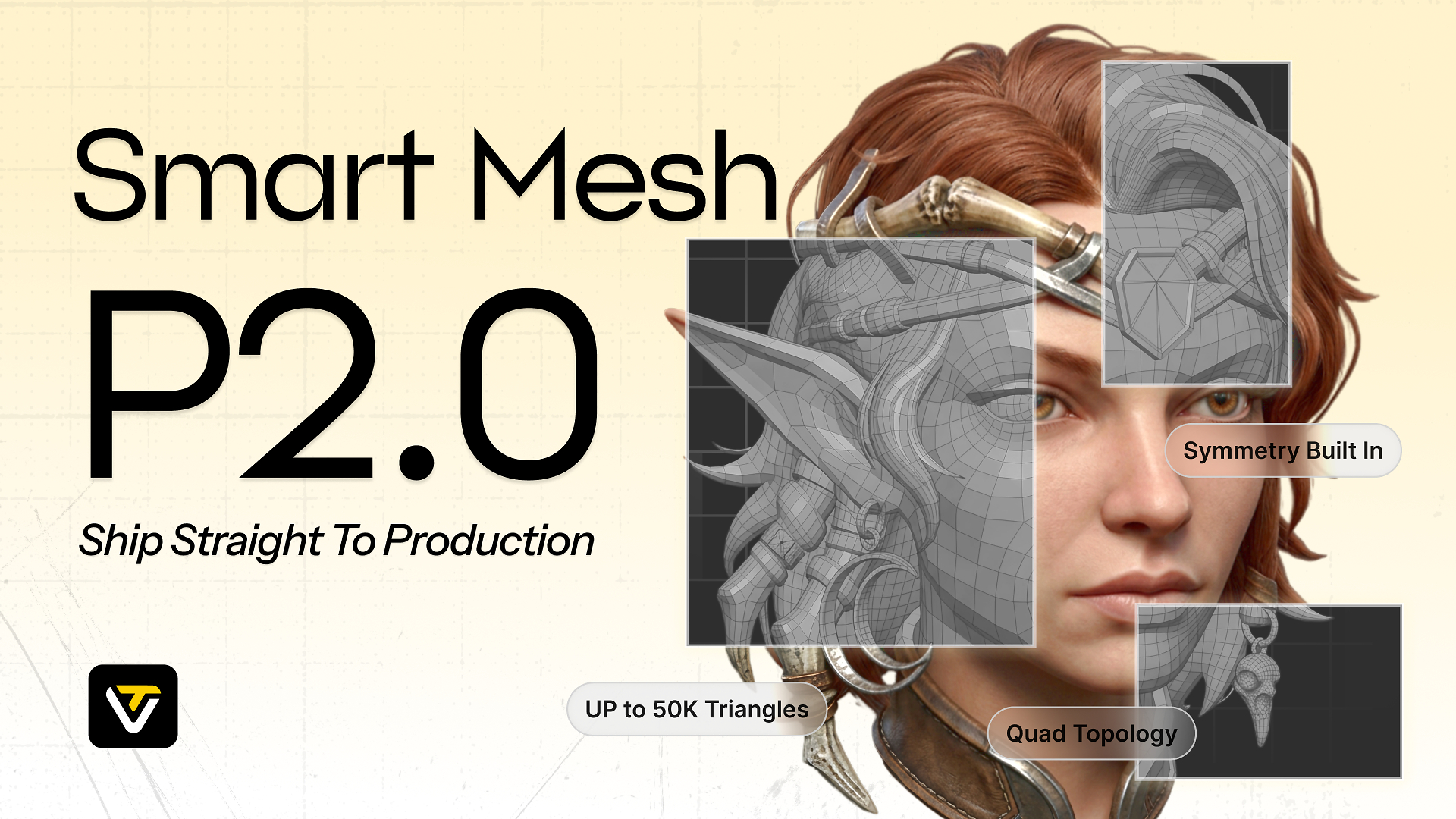
Tripo is the value pick and the fastest path to a clean mesh. It produces tidy quad-based topology with better edge flow than most competitors, and its auto-repair feature closes holes and fixes non-manifold geometry before export. That single step removes the most common slicer failure. It exports STL and 3MF directly, which is exactly what a 3D printer wants. The free tier gives roughly 200 credits per month for non-commercial use. Pro plans cost around $12 per month billed annually.
If you want a usable printable mesh with the least manual cleanup, start with Tripo alongside Meshy.
Rodin (Hyper3D)
Rodin, built by Deemos, produces the highest-fidelity organic meshes in this category. Its Gen-2.5 model supports five quality tiers, prompt-based mesh editing, and 4K PBR textures. The generation speed is impressive: full geometry in roughly 4 to 5 seconds. Rodin's pricing model is different from the rest. Generation is effectively free and unlimited. You pay a credit only to download a model, roughly $0.50 to $1.50 each depending on your plan. Subscriptions bundle download credits, with Creator plans around $20 to $30 per month and Business plans around $120 per month.
Rodin is the pick when surface detail matters most: busts, creatures, sculptural pieces, and anything where fine geometry defines the result. Expect to spend 15 to 40 minutes in a mesh editor before a Rodin output slices cleanly.
Hunyuan3D
Hunyuan3D, from Tencent, is the open-source alternative. Version 2.1, released in mid-2025, was the first open-source generator with PBR materials. If you have a capable GPU, you can run it locally or through ComfyUI at no cost, with no credits and no data leaving your machine. It exports OBJ, FBX, and GLB. Microsoft TRELLIS and Stability Stable Fast 3D are two other strong open-source options worth considering if you already have the hardware.
For tinkerers and anyone generating at volume, local open-source is the cheapest serious option in 2026. The tradeoff is setup effort and the need for your own repair workflow.
Luma Genie
Luma Genie is the fastest way to go from a text prompt to a rough 3D shape. It generates through the web or Discord for free, with no GPU required on your end. The output is best treated as a concept or starting mesh, not a finished print. Brainstorming forms, blocking out a design, or grabbing a quick base to sculpt on is where Genie excels. Plan on real cleanup before anything from Genie reaches a slicer.
Sloyd
Sloyd blends procedural generation with AI to build game-ready assets in real time, with optimized topology, automatic UVs, and levels of detail. It has a dedicated 3D-print preset that aims for watertight, manifold output, which makes it one of the more print-aware tools. Commercial 3D-print rights are not included by default on the free tier, so check the terms if you plan to sell. The Starter tier is free, and Plus runs around $11 per month billed annually. Sloyd is best when you want stylized, clean, parametric-feeling assets rather than photoreal reconstructions.
The repair step nobody talks about
Every tool in this list benefits from a repair pass before slicing. Check the mesh for holes, non-manifold edges, thin walls, and missing flat bases. Meshmixer and Blender both handle this in minutes for simple models. Some tools, like Tripo, automate part of this. Others, like Rodin, leave it entirely to you. Factor that time into your workflow when comparing tools.
Licensing and cost
Free tiers almost always carry non-commercial restrictions. Meshy and Tripo both require a paid plan if you sell prints. Sloyd excludes commercial 3D-print rights by default. Hunyuan3D is free and unrestricted locally, but hosted or cloud variants may have different terms. Check the license before you list anything for sale.
When to use what
Meshy fits users who want one tool that covers the full pipeline: generation, texturing, rigging, and direct export to a slicer. Tripo fits users who care most about clean topology and fast generation at a low price. Rodin fits users chasing the highest possible surface fidelity for organic shapes. Hunyuan3D fits users with a GPU who want to generate without subscription costs. Luma Genie fits quick concepting and brainstorming. Sloyd fits stylized, parametric assets.
None of these replace CAD for functional parts. But for the right kind of project, they cut hours of modeling down to minutes.


Comments (0)
No comments yet. Be the first!
Leave a Comment