Meshy closed a $400M Series B at a $1.5B valuation, the largest round ever for AI 3D generation. Here's what it means for makers who print AI-made models.
The Biggest Bet Yet on AI-Generated 3D
Meshy, the Silicon Valley startup building foundation models for AI-powered 3D generation, has closed a Series B round of nearly $400 million at a $1.5 billion valuation. The company says it's the largest funding round to date for a business built specifically around AI 3D — and the numbers behind it explain why investors are paying attention.
As of July 2026, Meshy reports annual recurring revenue growing roughly 12x year over year, more than 12 million registered users, and over 100 million models generated on the platform. The round was led by IDG Capital, Matrix Partners China, and Monolith Management.
What Meshy Actually Does
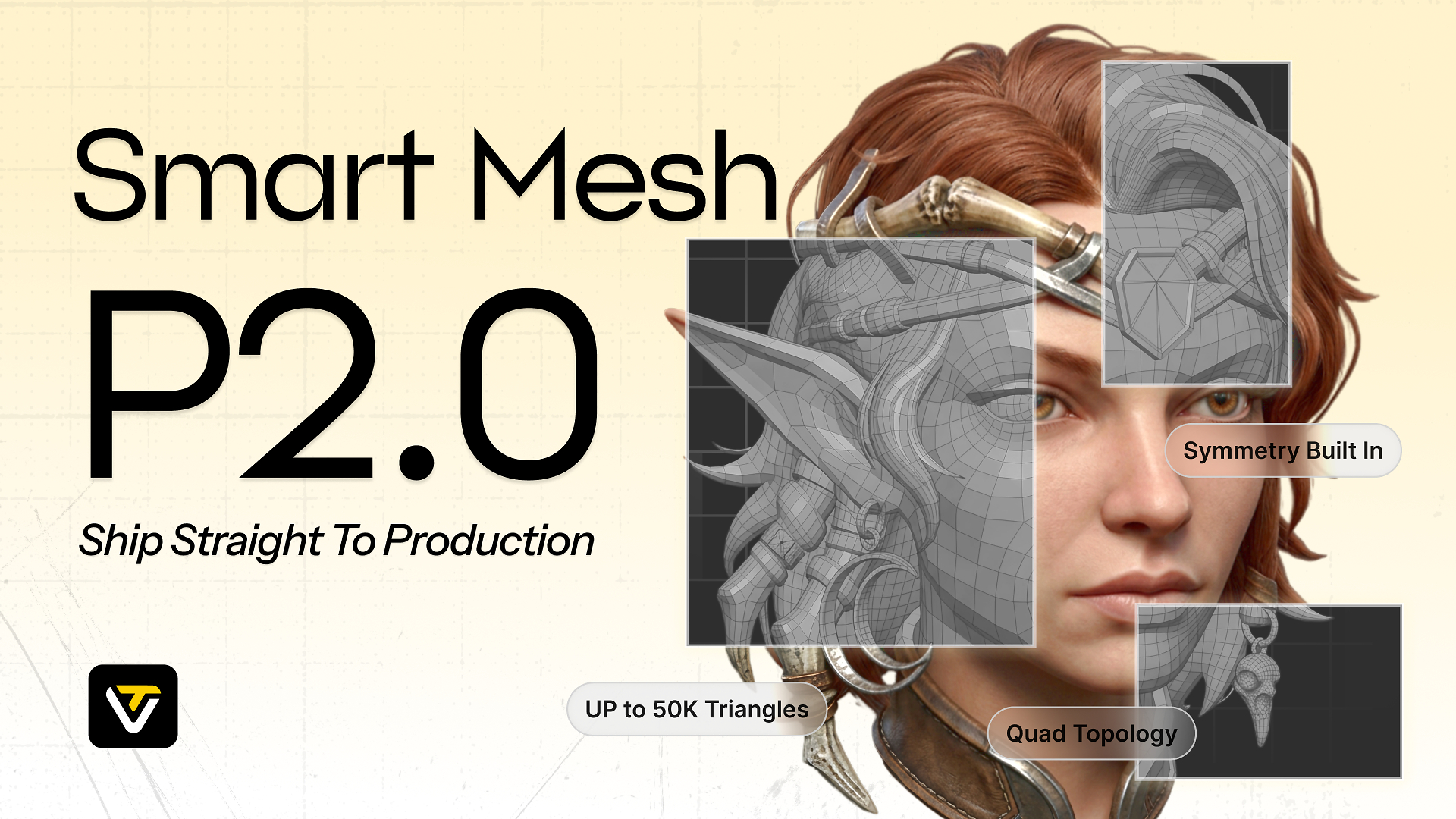
From a single line of text or one reference image, Meshy generates a usable 3D model in about a minute. The pitch has shifted from "looks right on screen" to "ready for real production" — meaning the output is increasingly usable not just in games and film, but as physically printable objects. That distinction is the company's core differentiator and the reason it sits at the intersection of generative AI and desktop manufacturing.
Two recent releases matter most for makers: Meshy 3D Agent, billed as the world's first AI agent for 3D creation (now available to all registered users), and Auto Split, which automatically breaks a model into printable parts. Together they point at a workflow where you describe an object, the agent builds it, and you send it straight to the slicer.
Why This Matters for 3D Printing
For years, the bottleneck between "I want a thing" and "I have a printed thing" was modeling skill. Tools like Meshy lower that wall dramatically. If a prompt can produce a watertight, support-friendly STL in under a minute, the practical ceiling for casual makers rises overnight — and the addressable market for consumer printers grows with it.
The flip side is quality control. AI-generated geometry still needs a human eye for tolerances, wall thickness, and print orientation. Treat these models as a fast first draft, not a final engineering part.
Where the Money Goes
Meshy says it will expand the platform and push beyond pure 3D into the broader creative ecosystem, including real-time interactive content. It has already teased an AI-native game, "Black Box: Infinite Arsenal," where players combine items and the AI generates new weapons on the fly. The 3D-printing angle isn't going away — it's becoming one pillar of a much larger content engine.
Bottom Line
A $1.5B valuation signals that the market now treats "text-to-3D" as infrastructure, not a novelty. For printer owners, the practical takeaway is simple: the gap between an idea and a physical object keeps shrinking, and free or low-cost AI modeling is now a legitimate part of the maker toolchain.


Comments (0)
No comments yet. Be the first!
Leave a Comment