Bambu Lab's A2L doubles the A1's build volume and adds a servo extruder and cutting module for less than you expect.
The A2L is the A1 grown up
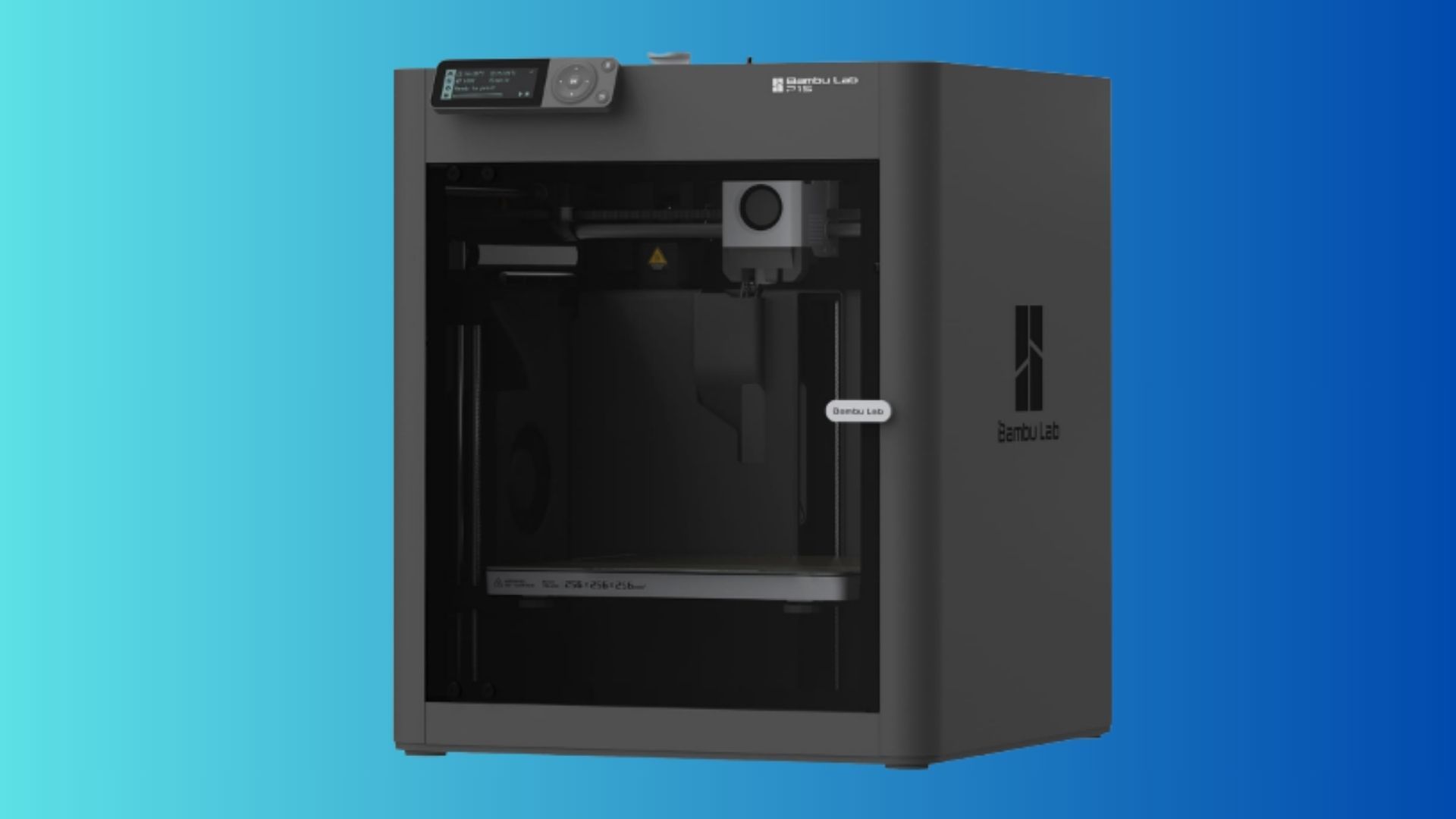
The Bambu Lab A2L does not try to reinvent the company's open-frame formula. What it does is scale that formula up in all the right places. The build volume jumps from 256 x 256 x 256 mm on the A1 to 330 x 320 x 325 mm here. That is over twice the overall print volume in liters, and it makes a real difference when you want to print large enclosures, props, or multi-part assemblies on a single plate.
Bambu Lab also upgraded the extruder motor. The A2L uses a PMSM closed-loop servo, the same type found in the P2S and X2D. That motor actively monitors for grinding, clogging, and air prints, which is useful if you leave long prints unattended. Adaptive vibration compensation rounds out the hardware improvements, letting the printer adjust to heavier bed loads without losing print quality.
It still shakes quite a bit
Large beds move a lot of mass, and the A2L is no exception. Even on a sturdy desk, this printer visibly shakes during fast travel moves. Bambu Lab added inertial granular dampeners at the top corners of the frame to absorb resonance, and the system helps, but the shake is still noticeable. If your setup is on a flimsy table or shared surface, you will want to dampen it further.
The cutting and pen modules are genuine extras
The A2L supports a cutting module and a pen plotter, both sold as upgrades. The cutter handles cardstock and thin materials cleanly. The pen plotter works well for greeting cards and labeling projects. Neither is a reason to buy the printer on its own, but if you already run a small workshop or maker space, having both options on one machine is genuinely convenient.
Pricing and verdict
The A2L starts at $469 for the printer alone. Adding the AMS Lite brings the price to $569, and the cutting and pen plotting kit pushes it to $639. For a large-format printer with an auto-calibration system, a camera, and multi-material support, that is competitive. If you only print small parts, the A1 remains the better pick. If you regularly run into the A1's build ceiling, the A2L is a straightforward upgrade with real hardware improvements and a price that does not punish you for wanting more volume.

Comments (0)
No comments yet. Be the first!
Leave a Comment