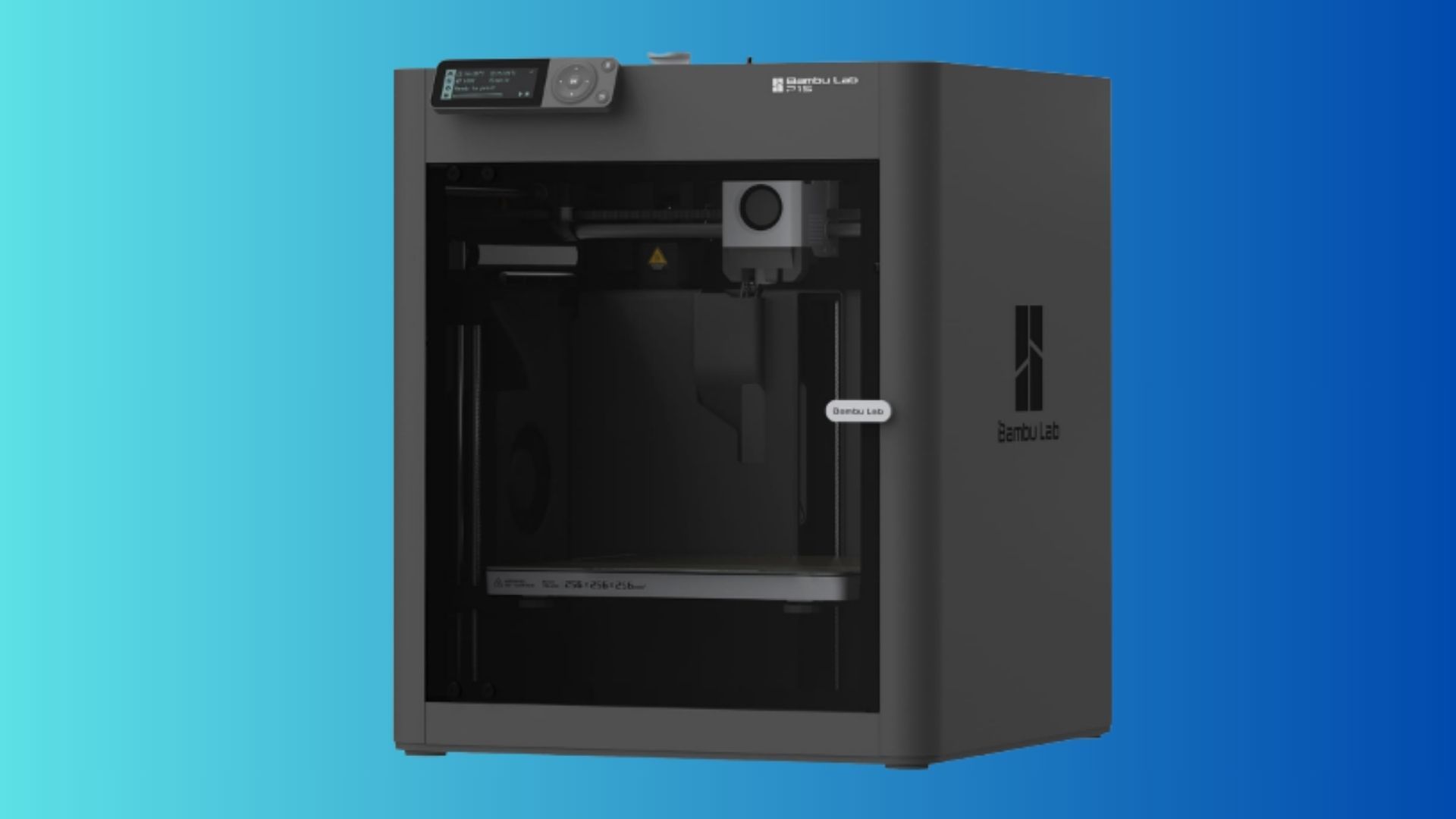
The Bambu Lab A2L doubles the A1's build volume, adds a closed-loop extruder, and throws in pen plotting and blade cutting. It is the best budget large-format printer right now.
The A2L Is Not Just a Bigger A1
Bambu Lab's A-series printers earned a reputation for reliability and simplicity. The A2L keeps that foundation but adds enough real upgrades to justify the larger footprint. The build volume jumps from 256mm cubed to 330 x 320 x 325mm, which is more than double the total print volume. Under the hood, the extruder motor is now a PMSM closed-loop servo system, the same type used in the P2S and X2D. That means the printer can actively detect grinding, clogging, and air printing without relying solely on the slicer's timeout logic.
The adaptive vibration compensation system also carries over from Bambu's higher-end models. It adjusts to changing bed loads and toolhead positions during a print, which helps maintain quality on tall, heavy models. An inertial granular dampener sits near the bed to absorb frame resonance. On a sturdy table, the A2L stays quiet and stable. On a wobbly desk, it will still shake the surface. That is physics, not a design flaw, but it is worth planning for.
Cutting, Plotting, and More Colors
The A2L inherits the multi-function toolhead concept from Bambu's H-series. You can add a pen plotter and a blade cutter to the gantry, turning the printer into a multi-purpose desktop factory. The pen plotter worked well in testing for greeting cards and stickers, and the blade cutter handled contact paper and cardstock without tearing. If you already own an AMS Lite, it works with the A2L, and you can combine it with up to four standard AMS units for a maximum of 19 colors.
Bambu Studio, the slicer, has matured alongside the hardware. High-speed presets, engineering material support, and open-source Klipper-based fluid control interfaces are all included. The software is free and actively maintained, which matters for long-term usability. Bambu's ecosystem advantage is real here: the app, the camera, the cloud, and the filament profiles all integrate in a way that no competitor currently matches at this price.
Limitations
The heated bed tops out at 80C, down from 100C on the A1. That rules out high-temperature materials like ABS and polycarbonate in practice. The A2L is firmly a PLA, PETG, and TPU machine. The open-frame design also means enclosure-dependent materials are off the table without a third-party add-on. At $469 for the printer alone, $569 with AMS Lite, and $639 with the cutting and pen plotting add-on, the pricing is competitive, but the ecosystem costs climb fast if you want the full feature set.
Should You Buy It?
The A2L is the best budget large-format 3D printer available right now. The build volume alone makes it attractive for makers who have outgrown 256mm beds, and the PMSM extruder and vibration compensation are genuine quality-of-life improvements over the A1. If you need a reliable printer for cosplay props, miniatures, or functional parts and you want the convenience of Bambu's software ecosystem, the A2L delivers. Just keep it on a solid table and stick to lower-temperature materials.
Comments (0)
No comments yet. Be the first!
Leave a Comment