The PlateCycler C1 automates plate swaps on the Bambu Lab A1 so it can run through multiple jobs without supervision.
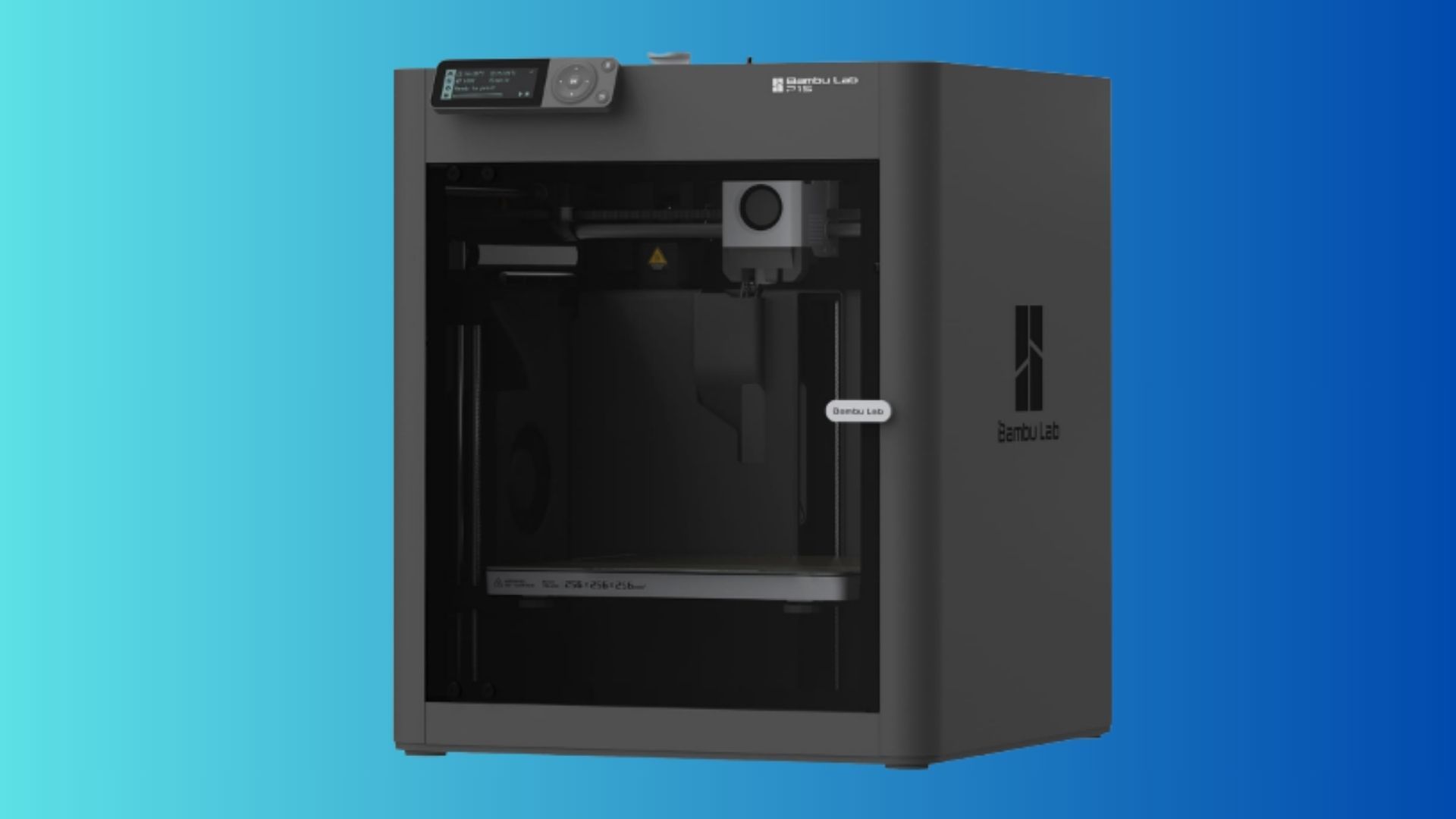
The Bambu Lab A1 is one of the best values in desktop 3D printing. It prints fast, it handles multi-color with AMS Lite, and it is easy to set up. For anyone running repeated production jobs, it still has one obvious weakness. When a print finishes at 2:00 AM, the machine sits idle until someone clears the bed. Chitu Systems thinks it has the fix.
The PlateCycler C1 is an automatic build plate changer for the Bambu Lab A1. It uses the printer's own toolhead and Y-axis movement to swap finished plates for fresh ones. No extra motors, no separate controller board, no firmware changes. The system is injection molded, not 3D printed, which is a deliberate choice for repeatability.
Here is how it works. You slice multiple plates in Bambu Studio just as you normally would. You run the exported G-code through the Chitu Systems web converter, which inserts the plate-changing routines between jobs. You load up to eight 256 x 256 mm PEI spring steel plates into the rear feeder, set a collection bin in front of the printer, and start the queue. When a print finishes, the toolhead and bed execute a mechanical release sequence. The completed plate drops into the bin. The next clean plate slides onto the magnetic build surface. The next print begins.
The key advantage is not speed. The A1 prints at the same speed it always does. The advantage is utilization. Overnight, the machine can run through a full queue of plates instead of sitting idle after the first job. For Etsy sellers, print farms, and small-batch manufacturers, those extra hours add up fast.
Chitu Systems already makes the PlateCycler C1M for the A1 Mini. The C1 is the full-size version. The main differences are the build volume, 256 x 256 mm versus 180 x 180 mm, and plate capacity, eight plates versus ten. Both use the same passive mechanical drive system and both support AMS Lite. Both are injection molded.
Injection molding matters here. Open-source and DIY plate changers prove the concept works. The harder problem is making the mechanism repeatable enough for unattended production. Small dimensional inconsistencies, friction, or material deformation can turn a plate change into a failed job. Molded guide surfaces and consistent geometry reduce that risk.
Who should buy the PlateCycler C1? If you run the Bambu Lab A1 as a single-plate machine for occasional prints, it will not change your life. If you run batches, repeated parts, or overnight jobs, it turns the A1 into something closer to a small production cell. The system is priced for users who already know the value of their printer's uptime.
Continuous batch printing on a desktop machine is not a new idea. What makes the PlateCycler C1 interesting is that it does not ask you to rebuild your workflow around a new machine. It fits inside the Bambu Lab ecosystem you are already using and removes the one step that still requires a person in the room.

Comments (0)
No comments yet. Be the first!
Leave a Comment