Elegoo's Centauri Carbon brings core XY motion, high-temp hotends, and a sealed chamber to the sub-$500 mass market.
Elegoo has been on an aggressive run since the Neptune series put the company on the map, and the Centauri Carbon marks a clear step up in ambition. This is Elegoo's first core XY printer, and it targets the same buyers who would otherwise shop for a Bambu Lab P1S, Creality K1C, or Prusa MK4S. The difference is the price: Elegoo sells the Centauri Carbon well under $500 while matching or exceeding the specs of printers that cost twice as much.
What Core XY Means Here
Most budget FFF printers use a gantry that moves on the X axis while the bed moves on Y. Core XY flips that arrangement. Two motors drive the gantry diagonally across the frame, keeping the print head light and responsive. The result is faster travel moves, crisper corners, and cleaner output at high speeds. The Centauri Carbon's frame is all metal with a rigid structure that minimizes vibration, which matters once you push print speeds past 300 mm/s.
The hotend hits 300 degrees Celsius, which opens up engineering-grade materials like polycarbonate and nylon without an upgrade. The heated chamber brings the entire enclosure up to 60C, cutting warping on large ABS and ASA parts. A HEPA filter with activated carbon scrubs fumes, which matters when you are printing the room next to your desk.
Build Volume and Connectivity
The build volume sits at 256 x 256 x 256 mm. That is a cube, which is unusual and useful: most budget printers have a tall, narrow bed that forces you to orient parts awkwardly. A cube gives you flexibility on tall or wide projects without wasting space.
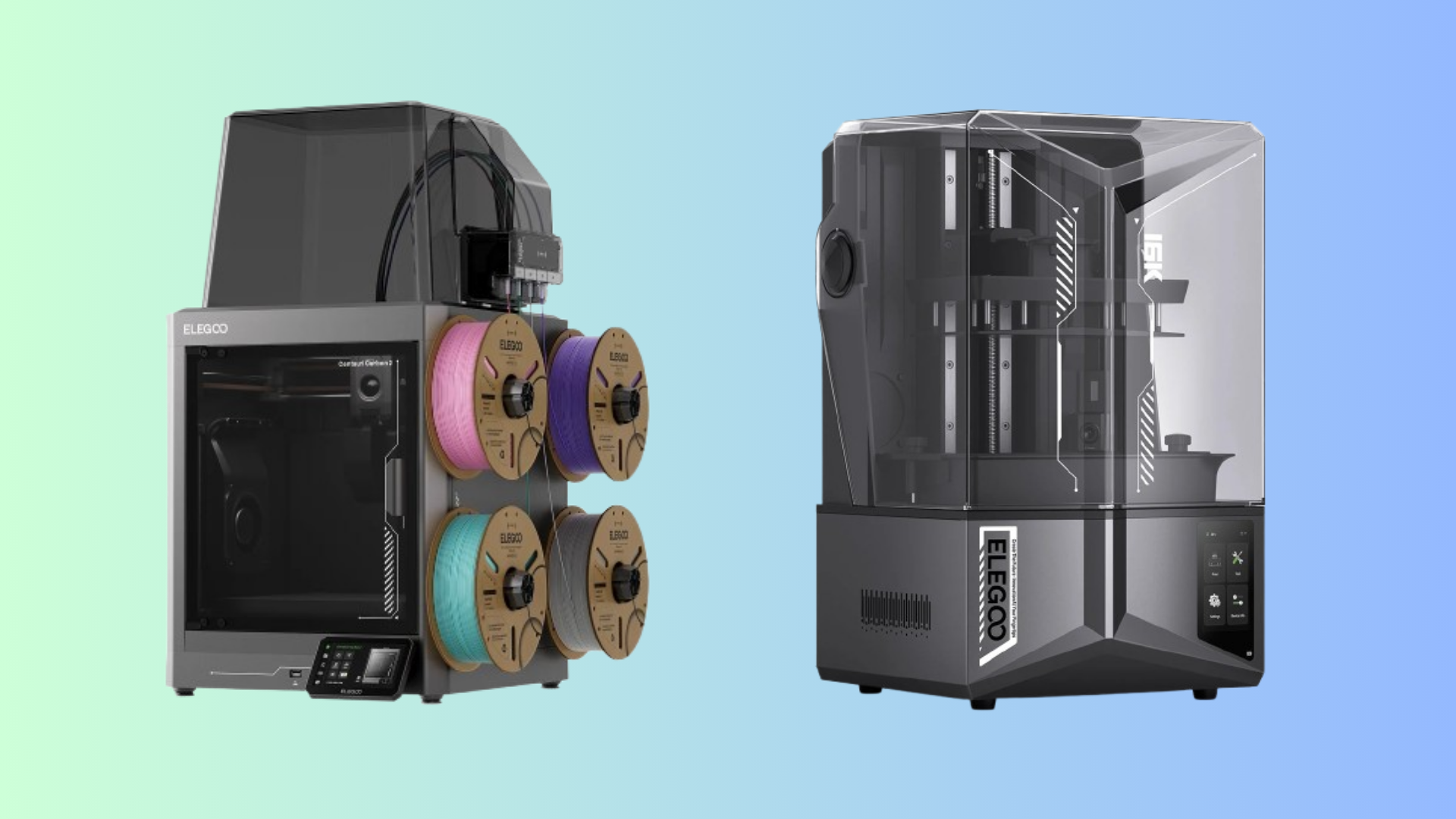
Elegoo includes Wi-Fi, a color touchscreen, and a built-in camera for remote monitoring. The slicer integration is handled through Elegoo Slicer, which is based on OrcaSlicer and feels familiar to anyone who has used Bambu Studio. The AMS-lite auto-filament system handles up to four spools and swaps colors mid-print without user intervention.
Real-World Print Quality
Testing the Centauri Carbon against the Prusa MK4S and Bambu Lab P1S in PLA, PETG, and ABS showed competitive results across the board. In PLA at 300 mm/s, the Centauri Carbon held dimensional accuracy within 0.1 mm on calibration cubes. Bridges came out clean without extra tuning. Overhangs above 60 degrees needed minor cooling adjustments, but nothing that a 10-minute slicer tweak did not fix.
ABS was where the enclosed chamber paid off. Prints that warp badly on open-frame machines came off the Centauri Carbon's PEI plate flat and dimensionally stable. The carbon fiber reinforced PETG test print showed no layer shifting at 250 mm/s, which is faster than most printers in this price bracket can sustain.
Where It Compromises
The 256 mm cube is smaller than the 256 x 256 x 270 mm bed of the Bambu Lab P1S, and the X1C offers a camera with AI failure detection that Elegoo has not matched. The build plate is PEI spring steel, which is standard now, but it is not the multi-texture plate Bambu includes for adhesion tuning. If you print a lot of small parts in sequence, the lack of a purge bucket integrated into the bed means you need to manage ooze manually or add a purge tower in the slicer.
The extruder uses a direct drive system with a gear ratio that works well up to 300 degrees Celsius, but it is not as refined as the Bondtech gears found on Prusa or the custom extruder on the P1S. Flexible filaments like TPU print fine at moderate speeds, but pushing above 100 mm/s can cause minor grinding on very soft compounds.
Who Should Buy It
The Centauri Carbon is the right printer for anyone who wants core XY performance without paying the premium tax. It is also the obvious choice for existing Elegoo users who already own an AMS-lite: the ecosystem carries over cleanly. If you need a larger build volume or AI camera monitoring, the Bambu Lab X1C still justifies its higher price. For raw speed, material range, and print quality at this price point, nothing else in the budget segment comes close.
Elegoo is no longer just the value option. The Centauri Carbon proves the company can compete on engineering, and at this price, it is going to pressure every other budget manufacturer to respond.
Comments (0)
No comments yet. Be the first!
Leave a Comment